
Live TV - Real-time Streaming Platform
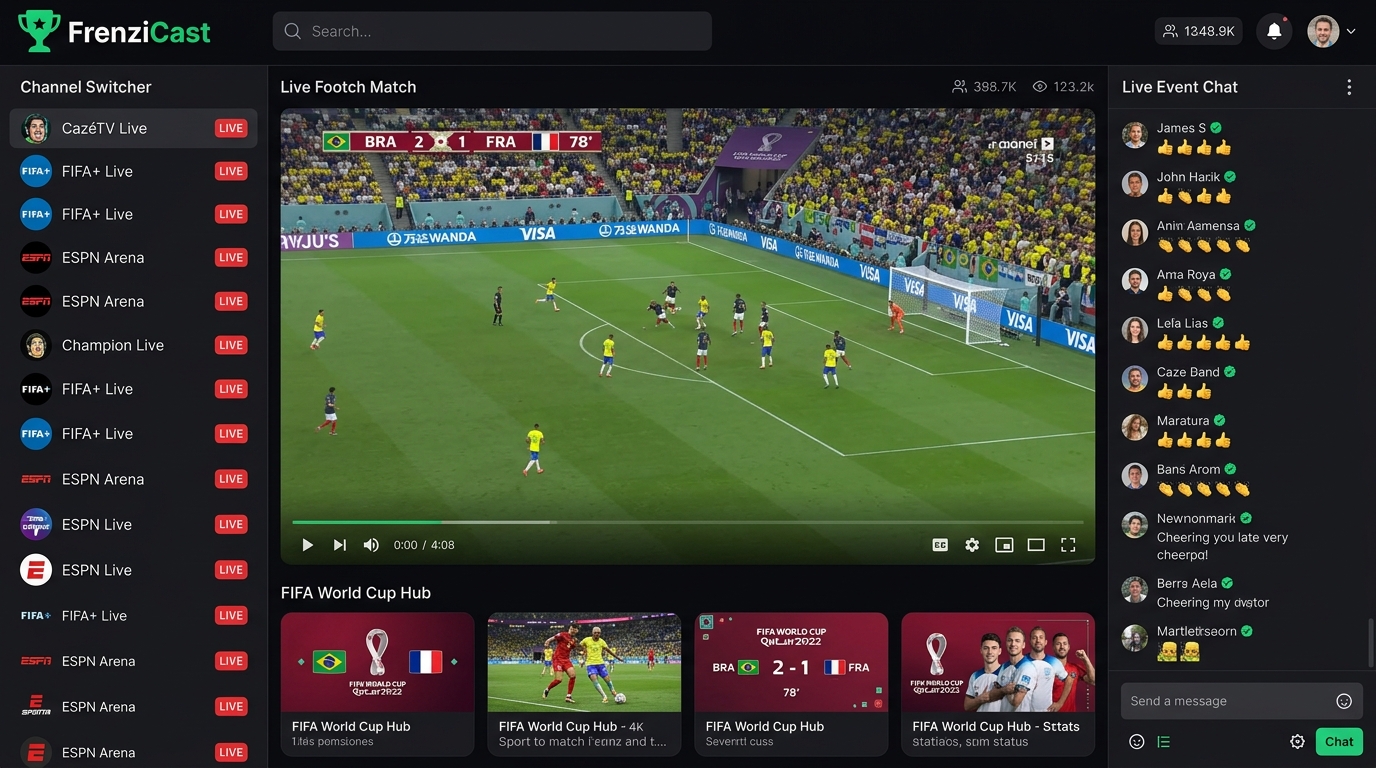
Multi-protocol live TV streaming with WebSocket real-time synchronization
Core Problem Statement
"Traditional TV streaming requires complex infrastructure to handle concurrent viewers, protocol compatibility, and real-time viewer state synchronization. Existing solutions are either closed-source or lack modern web capabilities."
Architectural Implementation
Next.js full-stack application with a three-layer architecture: Frontend (React 19 with Tailwind CSS for UI), Backend (Next.js API routes with Mongoose/MongoDB), and Real-time Layer (Socket.io with Redis adapter for scalable WebSocket connections). HLS.js and MPEGTS.js handle different streaming protocols client-side.
Engineering Deep Dive
Detailed review of tradeoffs, database models, scaling strategies, and microservices
Structural Trade-offs & Decisions
Server-side rendering adds latency for dynamic content but improves SEO and initial load time. Redis caching trades memory usage for query performance. Horizontal scaling with Socket.io/Redis adds operational complexity compared to simpler polling-based systems.
Context & Constraints
- Built as a portfolio project demonstrating full-stack streaming capabilities
- Deployed on Vercel for serverless scalability
- Implements industry-standard HLS protocol for adaptive bitrate streaming
- Demonstrates real-time communication patterns with Socket.io
Database Modeling & Storage Strategy
MongoDB collections for: Streams (channel metadata, status), Viewers (viewer state, presence), ChatMessages (real-time messages), StreamStats (analytics, viewer counts). Mongoose schemas with indexes on frequently queried fields (stream_id, created_at). Denormalization of viewer counts in streams collection for fast queries.